Sunkind's ₹1,500 Crore Cell Deal and Evolve Green's ₹100 Crore Round Signal a Market Reshaped by Policy
With mandatory domestic cell sourcing taking effect June 1, the companies that have secured supply are now structurally separated from those that have not.
Two funding developments confirmed on May 28 mark a turning point in how India's solar sector is organising itself around a policy shift that has been years in the making. Sunkind India Limited has locked a 1 GW supply agreement for TOPCon G12R DCR solar cells with a domestic manufacturer, in a deal valued between ₹1,200 crore and ₹1,500 crore. On the same day, distributed solar platform Evolve Green announced it had secured ₹1 billion in fresh funding, though investor details have not been disclosed.
The Policy Mechanism Driving Both Moves
The immediate context for both announcements is the ALMM List-II mandate, which takes effect June 1, 2026. From that date, government-backed solar projects in India will require the use of domestically approved solar cells, under MNRE's Approved List of Models and Manufacturers framework. The policy applies to all utility-scale, net-metering, and open-access projects commissioned on or after June 1. Only six manufacturers currently hold ALMM List-II approval: Emmvee, Premier Energies, ReNew PV, Jupiter International, Adani Solar's Mundra subsidiaries, and First Solar's Indian arm. That is a narrow approved supplier base relative to the volume of module manufacturing capacity that now needs compliant cell inputs.
What Sunkind's Deal Signals
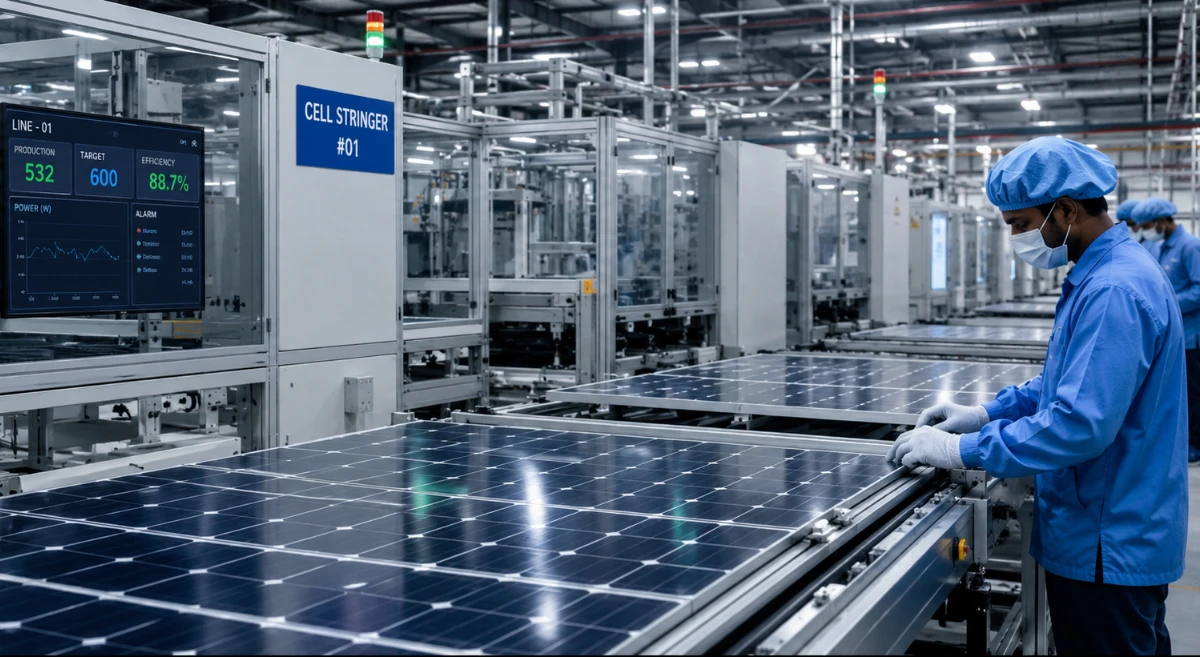
Sunkind India has established a 1 GW solar module manufacturing line near Jaipur, Rajasthan, with commercial production expected to begin next month after trial operations. The cell procurement agreement is the supply-chain foundation for that manufacturing push. Managing Director Hanish Gupta confirmed the deal secures ALMM-compliant cells for the company's upcoming operations, though the supplier identity is protected under a non-disclosure agreement.
The strategic logic is direct: a module manufacturer without a confirmed compliant cell supply after June 1 risks either ALMM de-listing which removes eligibility for government-backed project bids or production interruption. Module manufacturers from ALMM List-I that do not source cells from List-II will be de-listed and placed on a separate category called ALMM List-I(a), restricted from most government project segments. Sunkind's deal eliminates that risk through FY28, giving the company a two-year window to build manufacturing scale with supply security.
The Broader Competitive Landscape
The Sunkind agreement is one of several such moves underway as the June 1 deadline compresses decision timelines. India's solar manufacturing ecosystem is facing growing pressure as the transition toward stricter domestic sourcing norms highlights a structural gap between module assembly capacity and upstream solar cell production. With only six approved cell manufacturers, securing long-term supply commitments ahead of competitors has become a meaningful source of competitive advantage — particularly for companies, like Sunkind, making the transition from EPC and independent power producer activities into manufacturing.
Evolve Green's ₹100 crore raise on the same day points to continued capital availability for the distributed solar segment, even as the policy environment becomes more demanding on the supply chain side. The investor composition and deployment intent behind that round have not been publicly confirmed.
What to Watch
- Whether MNRE extends the ALMM List-II approved manufacturer roster beyond the current six, which would ease supply pressure but dilute the competitive advantage of early movers like Sunkind.
- The timeline for Sunkind's Jaipur facility to reach full commercial production, and whether the supply agreement holds as domestic cell demand tightens across the sector.
- Evolve Green's deployment plans for the ₹100 crore raise particularly whether the capital is directed toward project pipeline, technology, or geographic expansion, which will determine its strategic significance.