ALMM List-II Transition: MNRE Allows Conditional Commissioning for Pre-June Projects Not Yet Live
India's domestic solar cell mandate came into force on 1 June 2026. For a segment of the project pipeline, the transition created a timing trap and MNRE has now moved to close it.
The Ministry of New and Renewable Energy has issued a directive allowing provisional commissioning of utility-scale, captive, and commercial and industrial solar power projects that were physically installed before 1 June 2026 but could not be commissioned by that date for reasons outside the developer's control. The clarification, reported by Mercom India, addresses one of the more consequential operational gaps created by the rollout of ALMM List-II, India's mandatory domestic solar cell sourcing framework.
The ALMM List-II mandate, which came into effect from 1 June 2026, requires that solar modules used in projects commissioned on or after that date incorporate cells sourced exclusively from manufacturers listed on MNRE's Approved List of Models and Manufacturers for solar cells. The policy is designed to deepen India's domestic manufacturing base beyond module assembly and into the more technically complex upstream cell production stage. Its enforcement, however, created a boundary problem: projects built with modules that did not meet List-II cell requirements because those modules were procured before the mandate — faced the prospect of being unable to commission despite being physically complete.
The Nature of the Problem
The commissioning deadline is not a paperwork formality. Under India's solar procurement framework, a project that misses its scheduled commercial operation date faces liquidated damages, risks losing its power purchase agreement, and may trigger lender default provisions. For developers who contracted modules in 2024 or early 2025 when the ALMM List-II deadline was still 18 months away and domestic TOPCon cell capacity was a fraction of what projects would need — the June 2026 cutoff was always a potential stranded-asset event.
Mercom India's earlier reporting noted that operational domestic TOPCon cell capacity stood at approximately 28 GW at the time of the mandate's approach, against a far larger pipeline of projects requiring List-II compliant modules. Several state regulators and developer associations had flagged this supply-demand mismatch, and some developers had sought an extension of the List-II deadline entirely. MNRE declined to extend the deadline itself but has now created a structured relief mechanism for the specific cohort of projects physically complete but not yet commissioned.
What Provisional Commissioning Means in Practice
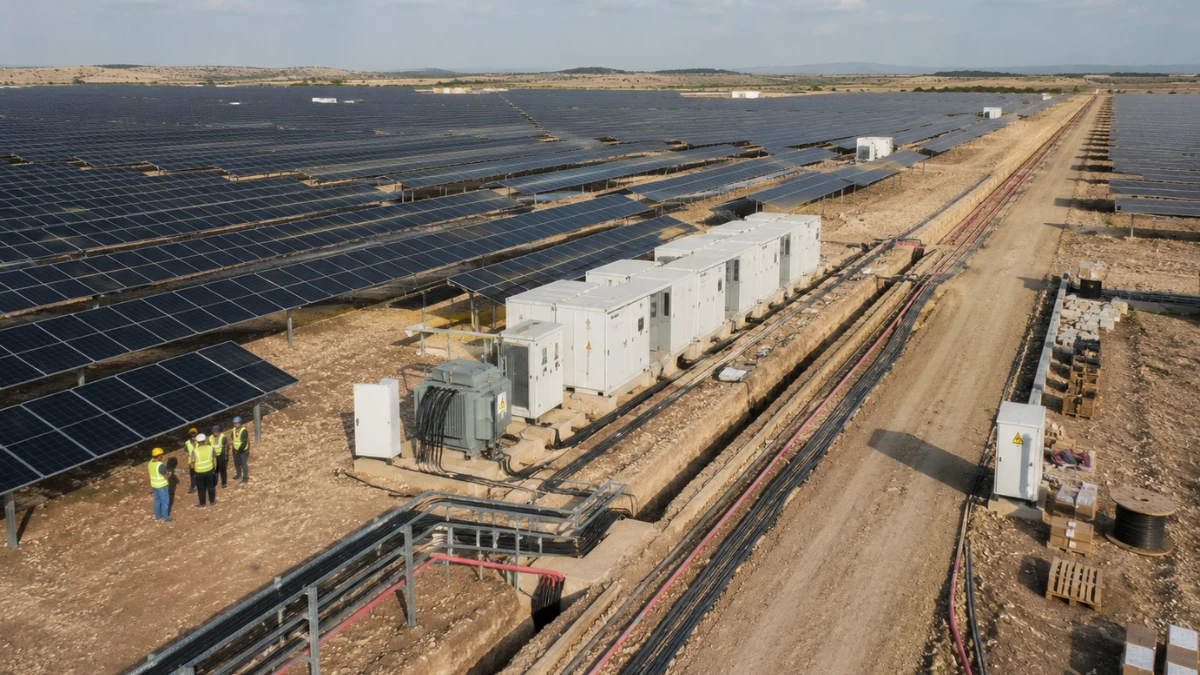
The directive covers projects across three categories: utility-scale projects, captive power projects, and commercial and industrial installations. The qualifying condition is that the project must have been installed panels mounted, systems integrated before 1 June 2026, with the commissioning delay attributable to circumstances beyond the developer's control rather than to construction delays or commercial decisions.
For EPC contractors and project developers in this cohort, the practical benefit is significant. Provisional commissioning allows a project to begin generating and delivering power, which triggers revenue flows and satisfies lender disbursement conditions tied to COD, while the regulatory status of the module sourcing is resolved separately. It reduces the immediate cost of being caught in the transition and gives developers time to navigate the supply chain adjustment without losing their PPAs or facing penalty cascades.
For the broader ALMM List-II framework, the directive signals that MNRE is managing the mandate's implementation pragmatically rather than rigidly protecting the domestic manufacturing objective while acknowledging that the supply chain cannot absorb the full project pipeline simultaneously.
The Supply Chain Context
Rajasthan's energy department separately directed state distribution companies to process PM Surya Ghar applications under the voluntary subsidy-waiver route, which effectively creates a separate market stream for larger rooftop projects not subject to ALMM List-II constraints. That parallel development, combined with MNRE's provisional commissioning relief, suggests a policy architecture that distinguishes between projects where domestic cell sourcing is technically and commercially feasible today and those where it is not yet so.
The ALMM List-II framework remains intact and non-negotiable for projects commissioned after June 2026 that do not qualify for the provisional relief. Domestic cell manufacturers — who argued strenuously against any extension of the deadline retain the protection the mandate was designed to provide.
What to Watch
- The volume of projects that qualify for provisional commissioning: if the cohort is large, it will temporarily suppress demand for newly listed domestic cell manufacturers and delay the supply-demand rebalancing the mandate was designed to accelerate.
- Whether MNRE issues further clarification on the documentation required to establish that a commissioning delay was genuinely beyond a developer's control — a definition that will be tested at the project level.
- Domestic TOPCon cell capacity additions in the second half of 2026, which will determine how quickly the gap between available List-II compliant supply and project pipeline requirements closes.