Petroleum Ministry's 200-Litre Cap Exposes India's Genset Dependency Problem
As India's retail fuel system absorbs demand distortions triggered by a widening price gap between bulk and retail diesel, the government's new 90-day purchase cap is doing more than curbing arbitrage — it is forcing hospitals, data centres and telecoms to confront a structural dependency they have long deferred addressing.
India's Petroleum Ministry Restricts Retail Diesel for Bulk Consumers
Effective June 11, the Ministry of Petroleum and Natural Gas barred industrial, commercial and institutional consumers from purchasing diesel at petrol pumps. Sales through retail outlets are now capped at 200 litres per customer or vehicle per day. The restrictions, valid for up to 90 days, were issued in response to what the ministry described as an abnormal rise in retail diesel demand, after bulk consumers shifted purchases from dedicated supply channels to retail pumps, where diesel is priced at Rs 95.20 per litre in Delhi — against a bulk rate of Rs 134.50.
The price differential traces back to a deliberate policy choice. After West Asia tensions spiked in late February 2026, state-owned oil companies modulated retail prices to protect retail consumers from cost pass-through. Industrial and institutional buyers, priced at market rates, began routing purchases through retail pumps instead. In May alone, state-run IOC, BPCL and HPCL reported a 4.8 per cent jump in petrol sales and a 6.4 per cent surge in diesel, a sign of how quickly the arbitrage reshaped fuel procurement patterns.
Where the Disruption Lands
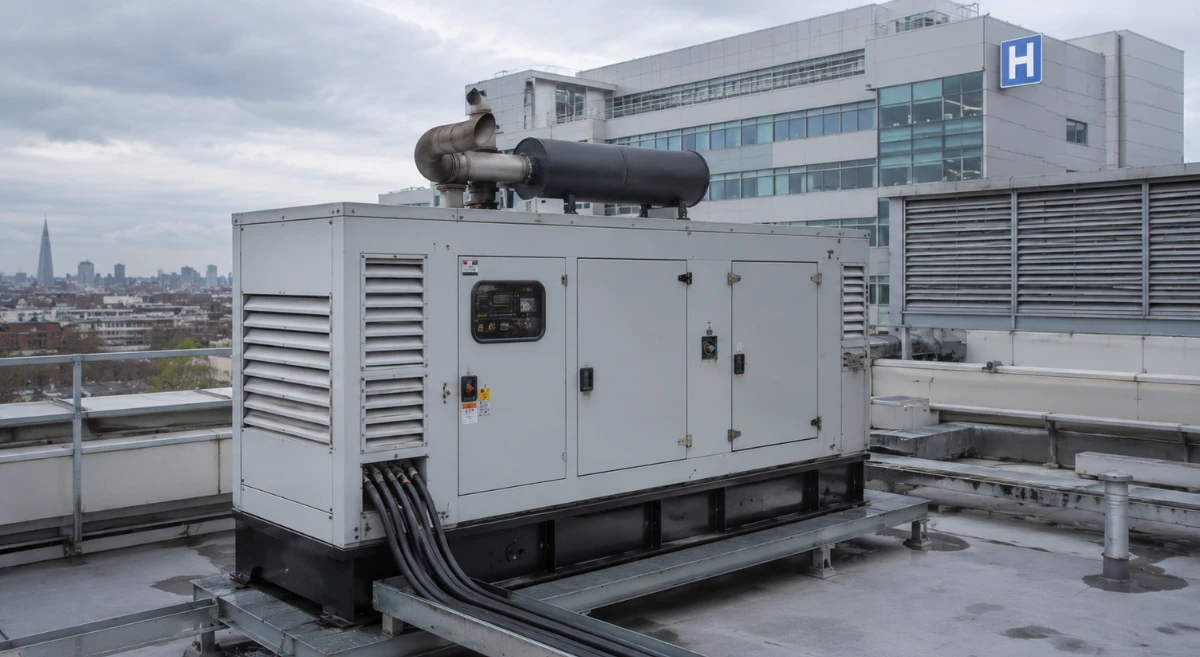
The order's immediate pressure points are facilities where diesel generators serve not just as backup, but as active power management tools. Hospitals that run generator sets proactively during surgeries and ICU operations to avoid voltage fluctuations now face constrained fuel access from retail channels. Data centres and IT parks operating in states where peak-hour grid tariffs exceed the cost of captive diesel generation routinely use gensets to manage electricity costs, not merely to cover outages. Telecom tower operators, represented by the Digital Infrastructure Providers Association (DIPA), have written to the Department of Telecommunications seeking urgent exemptions, warning that disruption to diesel supply could affect services to 1.3 billion subscribers during power outages.
Institutions with established bulk supply contracts are likely to absorb the transition with limited disruption. The more exposed cohort are those that have relied on the flexibility of retail procurement — topping up from nearby petrol pumps — without formalising bulk arrangements. These facilities will need to rapidly restructure procurement if the restrictions remain in force for the full 90-day window.
The Structural Problem the Cap Makes Visible
The more consequential reading of this order is not logistical — it is structural. India's critical infrastructure, from hospitals and telecom towers to IT campuses and data centres, has built deep operational dependency on diesel at a moment when the government's own clean energy trajectory demands a different fuel baseline. The DIPA letter to DoT is a statement of that dependency, not an aberration. It reflects how widely captive diesel generation has been absorbed into operational planning across sectors that have few regulatory obligations to move away from it.
The 90-day restriction is unlikely, on its own, to shift procurement strategies. But it demonstrates what a more sustained policy intervention or a sharper pricing signal could expose: that a material share of India's critical infrastructure uptime currently sits on a fuel system that is both environmentally costly and increasingly subject to supply-side interference.
What to Watch
- Whether the Ministry of Petroleum and Natural Gas grants sector-specific exemptions for hospitals, telecoms and data centres, and on what terms, will determine how disruptive the 90-day window becomes in practice.
- The restrictions are a stress test for facilities without formalised bulk supply arrangements. Those that restructure now may be better positioned if retail purchase curbs become a recurring policy instrument.
- Over the medium term, this episode reopens the question of whether data centres, hospitals and critical infrastructure should be subject to mandated clean backup power transitions, a policy discussion that has remained largely theoretical in India until now.