Waaree's 300 MW EPC Win Shows How India's Solar Supply Chain Lock-In Is Reshaping the Project Market
India's solar EPC market is no longer just a question of price. As the ALMM-II domestic cell mandate takes hold, supply chain certainty has become the most defensible competitive advantage in the sector.
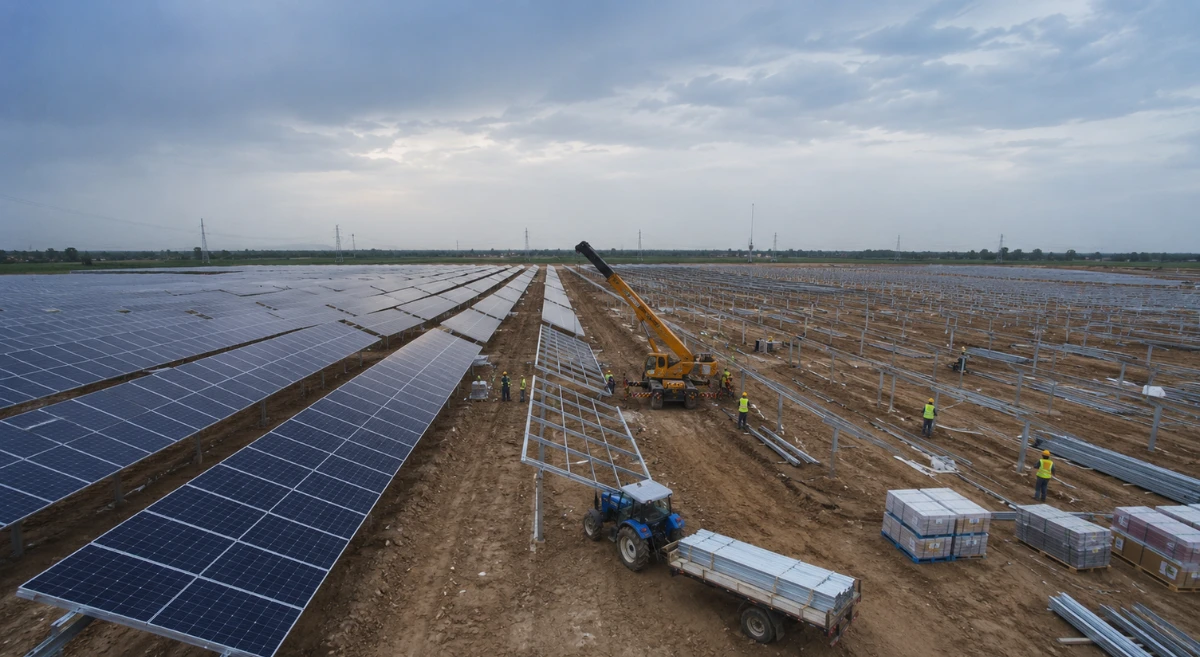
Waaree Renewable Technologies, the EPC arm of Waaree Energies, has received a Letter of Award from Sunsational Power Private Limited for a 300 MW ground-mounted solar project the latest addition to a confirmed order book of approximately 2.8 GW. The project, sized at 300 MW AC and 450 MWp DC, includes two years of operations and maintenance services post-commissioning and is scheduled for delivery during FY2026-27.
A Contract That Reflects a Structural Shift
On its own, a 300 MW EPC contract is a routine transaction in India's utility solar market. What makes this one worth attention is the broader context: it lands at the precise moment that the ALMM List-II mandate for domestically manufactured solar cells has come into force, fundamentally altering who can reliably promise project delivery.
From June 2026, solar projects commissioned under grid-connected, net-metered, and government scheme frameworks must use cells sourced from ALMM-approved domestic manufacturers. For EPC contractors without their own manufacturing backbone or secured supply agreements, this requirement introduces a new layer of procurement risk. For Waaree Renewable Technologies, whose parent operates 22.3 GW of solar module capacity and 5.4 GW of solar cell production capacity, the mandate functions as a commercial moat.
The Order Book Behind the Number
The 300 MW award adds to a pipeline that signals Waaree's growing dominance in domestic project execution. Of its approximately 36 GW in pipeline, around 23 GW is linked to domestic contracts and 12 GW to international work. The 2.8 GW confirmed order book provides revenue visibility over the near term and in a market where FY27 DCR demand is projected to exceed FY26 levels significantly, the pipeline composition matters as much as its size.
Waaree Energies is simultaneously progressing a vertically integrated manufacturing strategy: a 10 GW ingot and wafer facility in Nagpur broke ground in March, and the company has stated its intent to build out the full value chain from polysilicon to module assembly. That upstream ambition directly supports the EPC arm's ability to guarantee compliant supply at volume.
What the Competitive Landscape Now Looks Like
The ALMM mandate has effectively bifurcated India's EPC market into two categories: contractors with secured ALMM-compliant cell supply, and those still working to establish it. The former can bid with confidence and offer clients delivery certainty; the latter face procurement uncertainty at exactly the point when project timelines are tightening.
This dynamic is already visible in the Q1 2026 numbers. India added 15.3 GW of solar capacity in the first quarter a record driven in part by a commissioning rush ahead of the June mandate. That rush has now transitioned into a new phase: projects being planned and tendered under the assumption that domestic cell compliance is non-negotiable. EPC contractors that cannot credibly demonstrate supply chain compliance will find it harder to compete for awards in this environment.
What to Watch
- Whether Waaree's FY27 project delivery timeline holds as domestic cell supply tightens across a market where demand has reportedly doubled year-on-year.
- How EPC contractors without integrated manufacturing respond to the ALMM-II mandate: whether through long-term supply agreements, tolling arrangements, or pricing adjustments that reflect procurement risk.
- The project commissioning rate through FY27: India's record quarterly additions set a high baseline, and any supply-side disruption in ALMM-compliant cells could slow delivery across the broader pipeline.