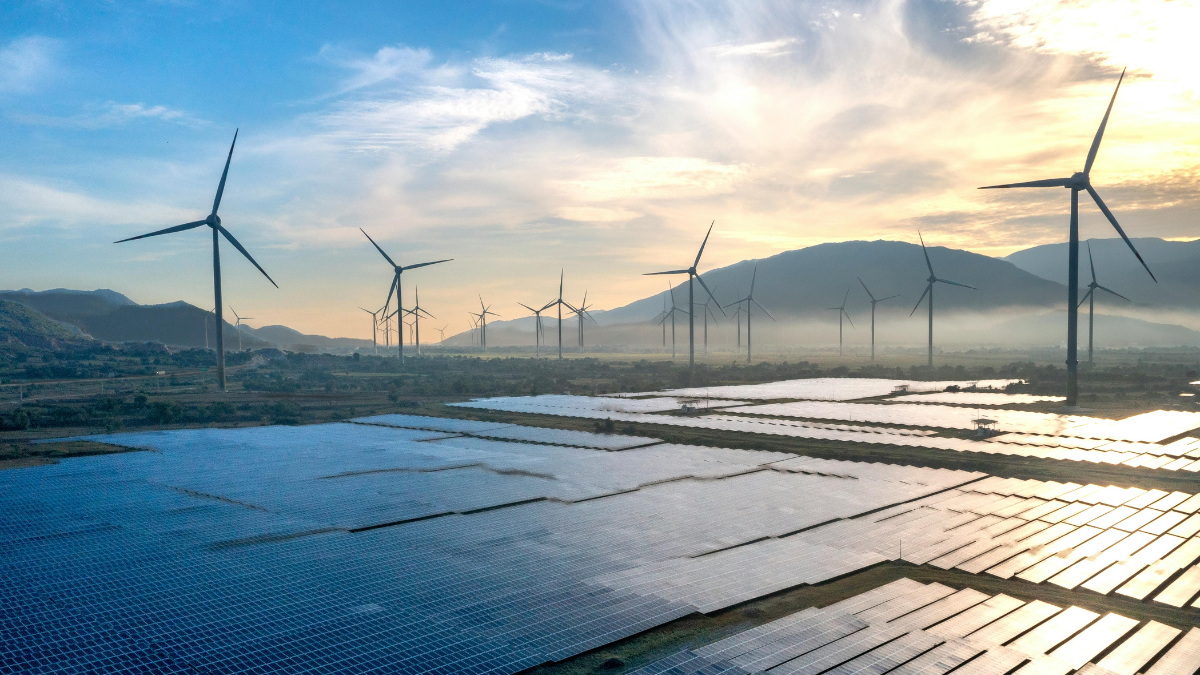
India Renewable Energy Capacity Reaches 253 GW in 2026 — 23% Year-on-Year Growth
Renewable Capacity Hits 253 GW as the Grid Rewrites Itself. With capacity additions nearly doubling year-on-year, India's energy transition has moved beyond ambition, the grid itself is now being structurally rebuilt around renewables.
A structural shift is underway in India's power economy. Renewable energy has crossed 253.96 GW of installed capacity, a 23% year-on-year increase, marking the point at which clean energy stops being a policy priority and starts being the primary architecture of the national grid. 2025 recorded India's highest-ever renewable capacity addition period, with additions nearly double the 24.72 GW added during the same period in 2024. The direction is no longer in question. The question now is execution speed.
The data signal is significant. Total renewable installed capacity reached 253.96 GW, up 23% year-on-year, reflecting stronger policy execution, faster tendering, improved grid integration, and growing confidence among developers and financiers. India now ranks third globally in solar installed capacity and fourth in total renewable capacity, according to IRENA. As of early 2026, non-fossil fuel-based sources account for over 52% of installed electricity capacity, a threshold India crossed nearly five years ahead of its original 2030 target. These are not incremental gains. They are system-level reconfigurations.
The drivers are layered and mutually reinforcing. On the policy side, India's updated Nationally Determined Contributions now target 60% non-fossil electricity capacity by 2035 and a 47% cut in emissions intensity from 2005 levels, setting a long-horizon procurement mandate that keeps capital flowing. The Ministry of New and Renewable Energy received a record 24% budget allocation increase in 2026, with the bulk directed toward the PM Surya Ghar rooftop solar scheme. On the market side, private capital is accelerating, with clean energy investment surging from $58 billion to $68 billion in a single year. The policy-capital feedback loop is now self-reinforcing.
The momentum is concentrated but broadening. Solar continues to lead, anchored by utility-scale parks and the PM Surya Ghar rooftop rollout targeting one crore households. Wind is regaining ground, wind capacity crossed the 50 GW mark in 2025, with 5.82 GW added in the year, compared to 3.2 GW in the prior period. Battery energy storage, offshore wind, and green hydrogen represent the next frontier, with Viability Gap Funding schemes now de-risking early-stage deployment across all three.
The frictions, however, are structural. Transmission infrastructure and grid storage remain underfunded relative to the scale of capacity being added — with spending on wind energy and energy storage having stagnated or declined in the 2026 budget cycle, even as renewable penetration accelerates. Discom payment delays continue to undermine project bankability. Land acquisition timelines remain a drag on large-scale solar and wind development. India is adding capacity faster than it is building the integration infrastructure to absorb it, a mismatch that, left unaddressed, will become the binding constraint on the next phase of growth.
The implication is significant. India is no longer in the demonstration phase of its energy transition, it is in the scaling phase. Clean energy is no longer the alternative, but the default, and that changes the calculus for every stakeholder in the system, from developers and financiers to industrial off takers and grid operators. The 500 GW non-fossil target by 2030 is not a ceiling. It is a floor. The countries and companies that position around India's clean energy buildout now will define the next decade of the global energy economy.