Apple 2026 Environmental Report: 30% Recycled Materials, Zero Plastic Packaging and 20 GW Clean Energy From Suppliers
With emissions down 60% since 2015 despite record revenue growth, Apple's 2026 Environmental Progress Report sets a new commercial standard for what global brands now demand from their manufacturing partners.
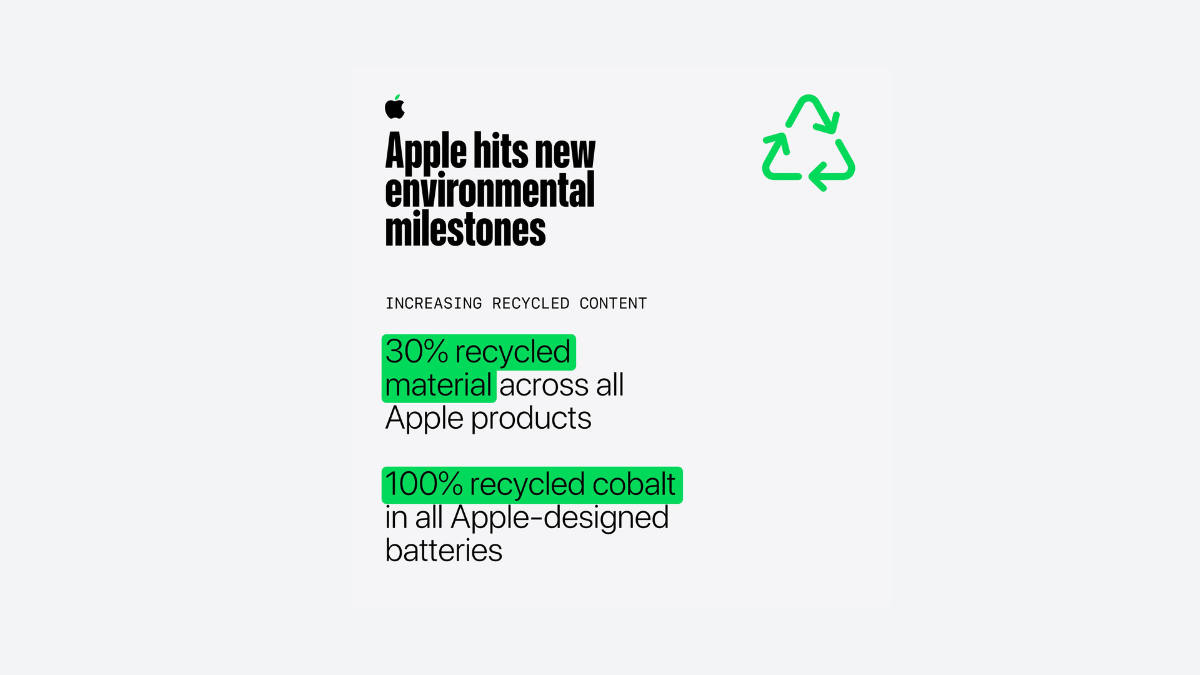
A new commercial threshold for corporate sustainability has been established. Apple's 2026 Environmental Progress Report, released this month, confirms the company has reached 30% recycled content across all products shipped in 2025, eliminated all plastic from packaging, and avoided over 26 million tonnes of emissions through clean energy procurement across its global supply chain. These are not pledges. They are reported, verified outcomes, achieved while revenue grew 65% over the same period that emissions fell 60%. The message to every company in Apple's supply network is unambiguous: sustainability and scale are no longer in tension.
The data anchors the shift. Apple's direct suppliers procured more than 20 gigawatts of renewable energy in 2025 through the Supplier Clean Energy Program, generating over 38 million megawatt-hours of clean electricity. The company now uses 100% recycled cobalt in every battery it designs and 100% recycled rare earth elements in all magnets. In its newest product line, the MacBook Neo enclosure is 90% recycled aluminium, with overall recycled content across key materials reaching approximately 60%. Apple also replenished more than half the water it withdrew globally across offices, data centres and retail stores in 2025.
Three structural forces are driving this outcome. First, Apple's 2030 carbon neutrality target, covering its entire business, supply chain and product lifecycle, has converted sustainability from a communications exercise into a supplier contract requirement. Second, the company's Supplier Clean Energy Programme now covers more than 90% of direct manufacturing spend, meaning clean energy is embedded in procurement decisions, not added after the fact. Third, recycled material economics have matured: Apple's use of recycled cobalt and rare earth elements is no longer a premium choice, it is a cost-management and supply security strategy as virgin material prices and geopolitical risk both rise.
The India dimension is direct. HCL, Infosys and Mahindra Logistics are among the Indian signatories to Apple's Climate Pledge. Indian manufacturers embedded in global electronics and components supply chains face the same requirements as any other Apple supplier: measurable renewable energy use, verified emissions data and materials traceability. This is not a future requirement, it is a current commercial condition. As BRSR (Business Responsibility and Sustainability Reporting) reporting becomes mandatory for more Indian listed companies, the Apple supply chain standard provides a practical, commercially tested framework that Indian manufacturers can align to.
The friction is one of readiness, not direction. India's manufacturing base, particularly in Tier 2 and Tier 3 cities where electronics component production is growing, faces a significant gap in renewable energy access, green financing, and MRV infrastructure. Small and mid-size Indian suppliers cannot access the same green bond markets or corporate PPAs that large anchor manufacturers can. Without targeted policy support, dedicated green tariffs for SME manufacturers, faster renewable connectivity in industrial clusters, Indian supply chain participants risk being priced out of global brand networks that are raising the baseline.
The implication runs deeper than Apple. What Apple mandates today, every major global brand will mandate within three to five years. The 30% recycled materials threshold, the zero-plastic packaging standard, the supplier clean energy requirement, these are becoming the entry conditions for participation in premium global supply chains, not differentiators within them. For India's manufacturing ambitions, the strategic question is no longer whether to meet these standards. It is whether the policy infrastructure, financing mechanisms and industrial ecosystem can move fast enough to ensure Indian suppliers are inside the supply chain when the bar rises again, and it will.