Circular Living 2026: How Repair, Refill, and Resale Are Reshaping Daily Life
From neighbourhood repair cafés to refill stations in supermarket aisles, circular living is no longer a niche lifestyle choice, it's rapidly becoming the default. Here's what's driving the shift, and how to go further.
The Bin Is No Longer the End of the Story
That cracked phone screen you finally got fixed. The jumper you bought second-hand. The shampoo bar that replaced three plastic bottles. These small choices, multiplied across millions of households, are adding up to something significant — and measurable.
By 2026, four major trends have reshaped sustainable living: the mainstream adoption of circular systems including repair shops, refill stations, and second-hand platforms; the rise of plant-derived personal care products; widespread packaging redesign away from single-use plastics; and the growth of community-scale solutions like rooftop gardens and shared tool libraries. Circular living is no longer aspirational. It is becoming infrastructure. Thegreencollective
What "Circular" Actually Means
The linear economy runs on a simple, destructive loop: take, make, throw away. The circular economy breaks that loop by keeping materials in use for as long as possible — through repair, reuse, remanufacturing, and recycling, in that order of preference.
The global circular economy market was valued at approximately USD 517.79 billion in 2025 and is expected to reach USD 798.3 billion by 2029, growing at a compound annual growth rate of 11.4%. That kind of growth doesn't happen without real behavioural change driving it. And yet, the numbers only tell part of the story. StartUs Insights
Repair and maintenance alone accounts for 46% of all circular economy jobs globally — the single largest share of any sector. Behind every repaired appliance or mended garment is a worker, a skill, a community keeping something useful alive. Sustainabilityonline
The Fast Fashion Reckoning
Few industries illustrate the waste crisis more starkly than fashion. Global apparel production rose from roughly 50 million tonnes in 2000 to around 80 million tonnes in 2019, while the average clothing lifespan has fallen from two to three years to just one to two years. The result is a mountain of discarded clothing that most recycling systems aren't equipped to handle. Rawshot
But the resale market is pushing back. Second-hand clothing platforms have grown from a USD 20–30 billion niche toward a USD 50–100 billion mainstream market. Consumers — especially younger ones — are increasingly choosing pre-loved over brand new, not just for the price, but for the principle. Rawshot
The challenge now is to move beyond individual virtue and build the systems that make circular fashion the easiest choice, not just the most conscious one.
Policy Is Finally Catching Up
Behaviour change at scale requires more than goodwill — it requires rules. The EU Circular Economy Act, expected to be in place by Q4 2026, aims to establish a market for secondary materials, reduce waste, and increase recycling, making circular products mainstream. For businesses, that means early alignment is no longer optional — it is competitive strategy. Reconomy
Takeback schemes — where brands collect used products and packaging from consumers to ensure they are properly reused, repaired, or recycled — continue to grow in popularity in 2026. Major retailers are expanding these programmes across furniture, textiles, and electronics. The direction of travel is clear, even where the finish line isn't. Reconomy
In 2026, circularity is moving from aspiration to execution, embedded directly into industrial and economic strategy — driven by climate targets, material scarcity, and growing geopolitical pressure around resource imports. TOMRA
What You Can Do — Starting This Week
The circular economy isn't waiting for perfect policy or perfect products. It's being built right now, in decisions made every day.
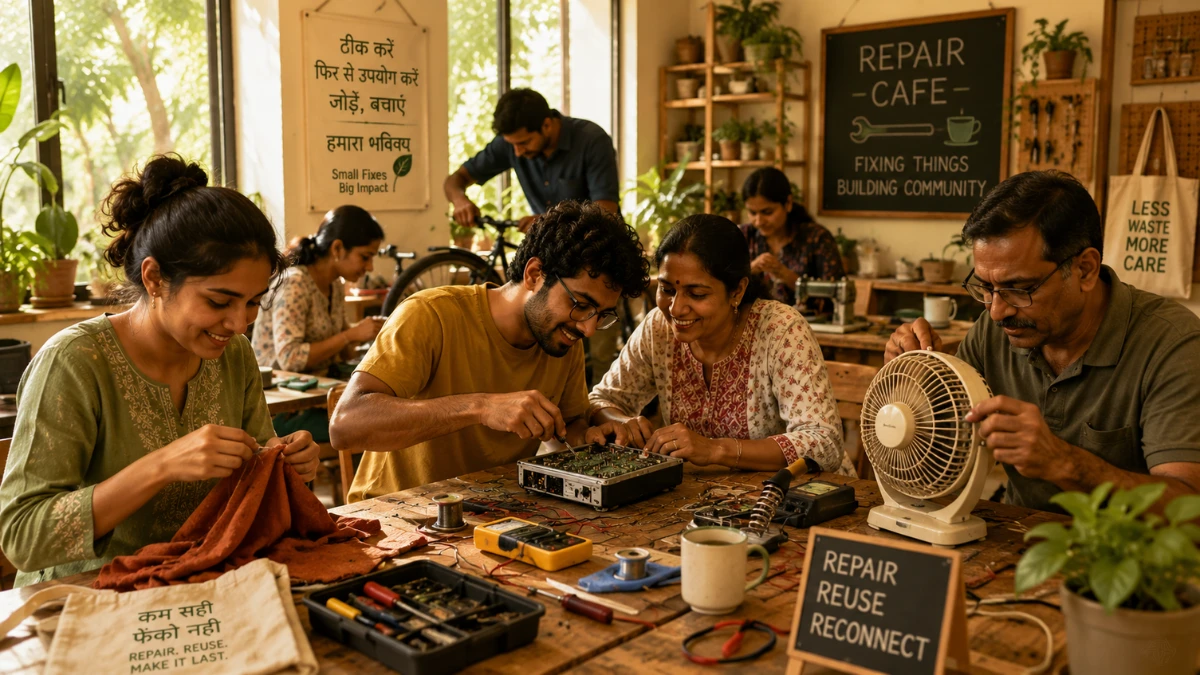
Repair first. Before replacing anything — a garment, a gadget, a piece of furniture — ask whether it can be fixed. Many cities now have repair cafés and community workshops offering free or low-cost help.
Refill where you can. Refill stations for cleaning products, personal care, and even food staples are expanding rapidly. Seek them out — and tell the businesses you love that you want them.
Buy second-hand with intention. Second-hand isn't just charity shops anymore. Peer-to-peer platforms, consignment stores, and brand-run resale programmes offer quality alternatives across almost every category.
Demand transparency. Ask the brands you buy from what happens to their products at end of life. A company with a real answer is one worth supporting. One that goes quiet has something to hide.
Sustainable living in 2026 requires only sustained curiosity, a willingness to experiment, and the resolve to choose the regenerative option whenever a realistic alternative exists. Every repaired zip and avoided single-use item contributes to a much larger shift. Thegreencollective
Share this with someone who needs to know — and help them take the first step toward living more circularly.