NABARD Signals Climate Finance Reorientation Toward Agriculture, Away from Grid Infrastructure
India's Climate Finance Arithmetic Has a Rural Problem
India's agricultural sector employs 40% of the national workforce but receives less than 8% of the country's climate and green finance flows. That figure, cited by NABARD Chairman Shaji Krishnan V V at the Economic Times India Net Zero Forum 2026, is the structural tension at the centre of India's net zero transition. Krishnan told the forum that rural India represents the critical pathway to India's net zero commitment, not a peripheral opportunity, and signalled that NABARD intends to reorient its climate finance architecture accordingly.
The Capital Allocation Gap Is Not Incidental
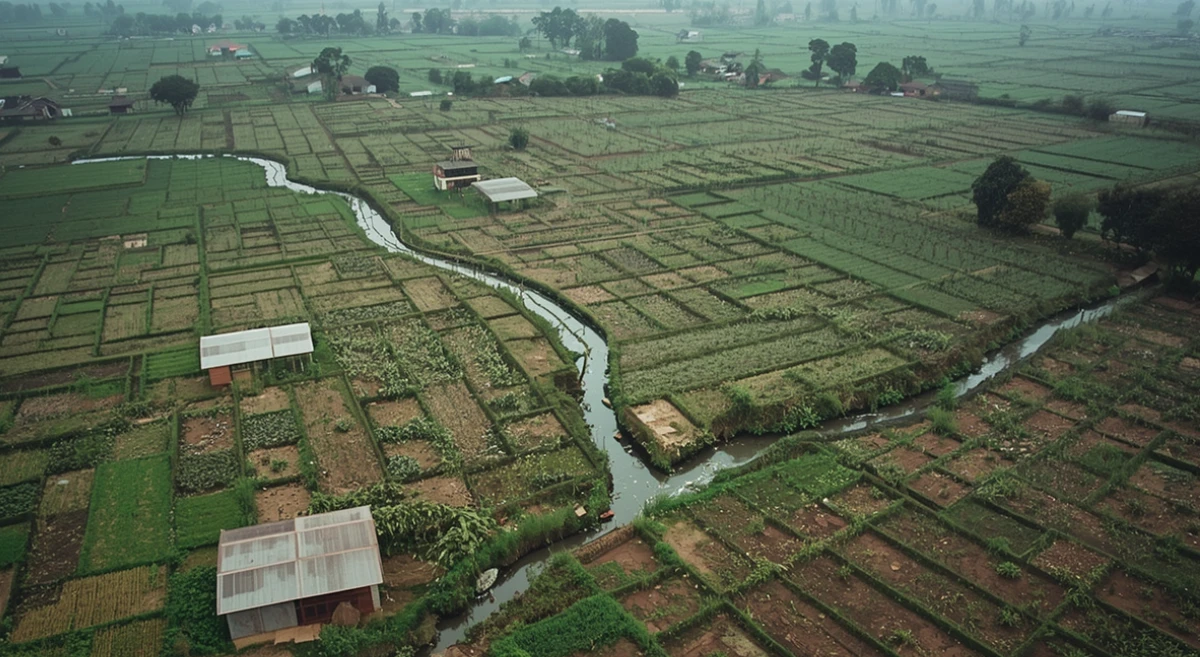
India's climate finance has, by design and by default, concentrated on large-scale renewable energy infrastructure: grid-connected solar capacity, transmission corridors, and manufacturing incentives for panels and batteries. The logic was legible: these are measurable, bankable assets with established credit profiles. What that architecture omitted was the 300 million farmers who face the most acute climate exposures erratic monsoons, soil degradation, water stress with the least institutional capital behind them.
Krishnan's positioning at the Net Zero Forum 2026 is a direct challenge to that architecture. Climate risks are highest in farms, forests, and watersheds, he said, and that is precisely where institutional capital has been scarcest. The implication is that India's net zero target cannot be met through centralised renewable capacity alone: it requires distributed, rural-first capital deployment at a scale that India's financial system has not yet organised to deliver.
What a Rural-First Transition Looks Like in Practice
NABARD's stated reorientation points toward a specific set of instruments: on-farm solar systems, micro-irrigation, soil carbon sequestration financing, and village-level water management. These are not new categories NABARD's Department of Climate Action and Sustainability already operates green lending products, and the institution holds accreditation as a Direct Access Entity under the Green Climate Fund. What is new is the explicit framing of rural climate finance as a structural priority rather than a social obligation sitting alongside mainstream capital deployment.
For investors tracking deal flow, the implications are concrete. Indian impact funds, multilateral development banks, and green bond issuers are now positioned to mobilise capital into agricultural climate technology, farm insurance products, and rural resilience infrastructure a set of asset classes that has remained underdeveloped relative to India's renewable energy buildout. The $50 billion-plus opportunity cited in the NABARD framing spans climate risk products, regenerative agriculture capital expenditure, and watershed management, all of which sit below the threshold of traditional Indian capital market attention.
The Questions the Statement Leaves Open
Framing and deployment are different things. NABARD has a history of piloting climate adaptation projects its Climate Change Fund, GCF-accredited projects, and the CAFRI programme with GIZ represent genuine institutional engagement but the scale of those interventions has remained modest relative to the green finance flows directed at India's energy sector. Whether the Net Zero Forum statement translates into revised lending targets, new financial product mandates, or formal capital allocation shifts within NABARD's portfolio is not yet clear.
There is also a sequencing question. Rural climate infrastructure is harder to underwrite than grid-connected solar: land tenure is fragmented, creditworthiness is thin, and returns on soil carbon or watershed projects are long-dated and difficult to monetise. The institutional infrastructure to make rural climate finance bankable at scale standardised measurement, blended finance vehicles, rural climate fintech rails is still being built.
What to Watch
- Whether NABARD issues formal revised lending guidelines or product mandates that operationalise the rural-first climate finance framing announced at the Net Zero Forum 2026.
- How multilateral development banks, particularly the Asian Development Bank and World Bank, respond to NABARD's repositioning both have active India rural finance pipelines that could scale rapidly if NABARD provides first-loss capital.
- The emergence of rural climate fintech as a distinct asset class: aggregators combining on-farm solar, crop insurance, and soil carbon credits into investable vehicles are the likely next product category to seek NABARD refinancing.