Critical Energy's Assembly-Line Geothermal Units Target the AI Power Bottleneck
The AI Power Race Reaches Below Ground
As hyperscalers exhaust every fast-track electricity option, a Los Angeles startup is betting that geothermal energy's real obstacle was never geology it was manufacturing.
A US startup has raised $22 million to bring factory-assembled geothermal power plants to AI data centres, promising deployment timelines of under two weeks per installation a claim that, if commercially validated, would compress a process that currently takes years into something closer to a procurement cycle.
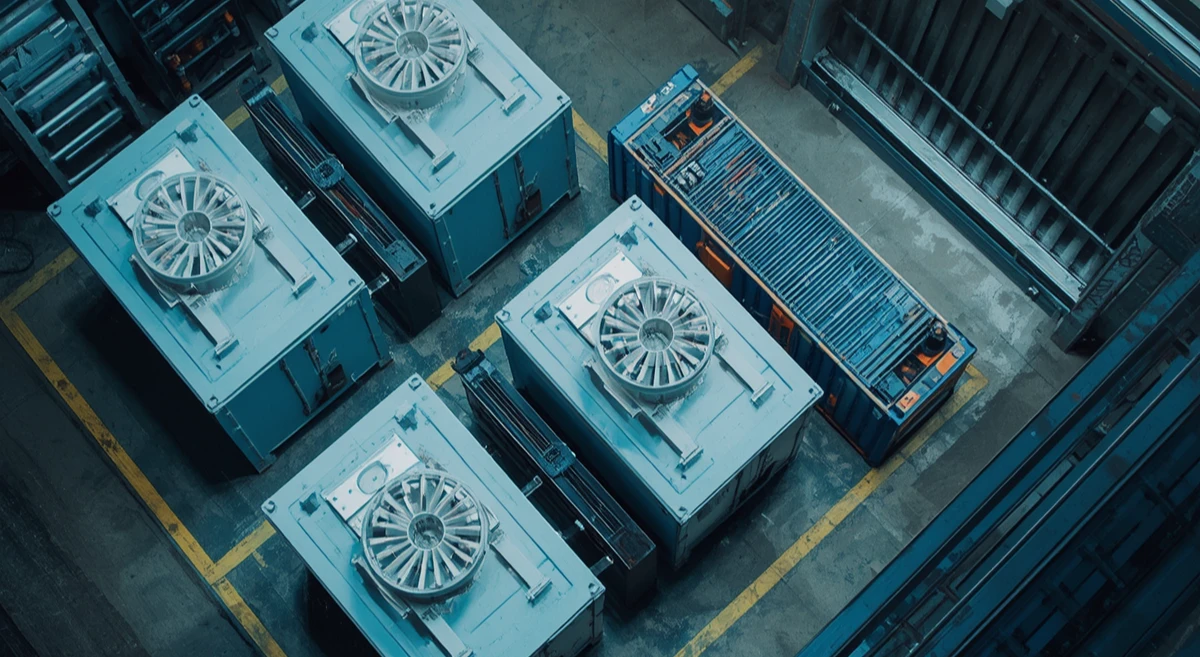
Critical Energy, founded by former SpaceX engineer Spencer Jackson, announced the seed funding round on 17 June 2026. The capital, led by Susa Ventures and Upfront Ventures, has accumulated since 2024 and will fund the company's first full-scale commercial plant, expected to come online in 2027. The company's Apex power units are built on assembly lines, shipped in standard trucking containers, and assembled on-site an approach Jackson describes as a supply chain overhaul rather than a technology invention. "The thing that needed to be done here was a manufacturing and supply chain change, not a technology invention," he told reporters.
Why Speed Is Now the Central Variable
The data centre industry is not waiting on cleaner energy options in principle it is waiting on delivery timelines. Solar and wind require grid interconnection queues that in some US markets stretch beyond five years. Advanced nuclear carries decade-scale development horizons. Even enhanced geothermal systems, while gaining commercial traction through developers like Fervo Energy (which completed a $1.9 billion IPO in May 2026), still require multi-year site development and drilling programmes.
Critical Energy's proposition is that the deployment bottleneck, not the resource base, is what has kept geothermal marginal. By manufacturing turbines on assembly lines and standardising the balance of plant, the company claims it can bring installations online on timelines that match the pace at which hyperscale operators are commissioning new server capacity.
The Competitive and Geographic Context
Geothermal's appeal to data centre operators is structural: unlike solar and wind, it provides baseload electricity unaffected by weather, at a capacity factor of approximately 90%. That makes it directly comparable to natural gas or nuclear in terms of operational reliability without the emissions profile of the former or the regulatory complexity of the latter.
The sector has attracted serious capital. Google has contracted up to 150 MW of geothermal capacity from Ormat Technologies for its Nevada data centres, under a deal announced in February 2026. Meta has a separate agreement with Sage Geosystems to deliver up to 150 MW of geopressured geothermal power, with the initial phase targeted for 2027. Fervo Energy's $1.9 billion IPO in May 2026 marked the clearest public signal yet of institutional confidence in the sector's commercial trajectory.
Critical Energy's modular model is differentiated from these players in one important respect: it targets the deployment phase rather than the resource development phase. Where Fervo and Sage are building the generation asset from the ground up, Critical Energy is effectively treating geothermal power hardware the way SpaceX treated rocket components — designed for repeatable manufacturing, not one-off construction.
The Gaps Worth Watching
The company's two-week deployment claim applies to installation of the Apex units, not to the underlying resource development. Geothermal energy still requires access to a suitable heat source — a constraint that limits deployable geographies to the western United States for most practical applications. Major data centre markets on the US East Coast, including the critical Northern Virginia cluster, have limited geothermal potential. Critical Energy has acknowledged this geography problem directly.
There is also a gap between a seed-stage company with a miniature working prototype at its Los Angeles facility and a commercially proven, scalable plant. The first full-scale commercial deployment is not expected until 2027, which means the two-week installation claim will not face a meaningful commercial test for at least another 18 months.
For India's context, the direct applicability of Critical Energy's model is limited in the near term: India's geothermal resource base is concentrated in specific regions, and the country has yet to develop the policy or financial infrastructure to bring geothermal into its mainstream energy mix. The broader signal, however, is relevant. India's hyperscale data centre market — growing at over 20% annually by infrastructure investment — faces its own version of the power procurement bottleneck. The manufacturing-first approach to firm, clean power is a design philosophy that Indian energy investors and data centre developers will need to track as the sector scales.
What to Watch
- Critical Energy's first full-scale commercial plant is targeted for 2027; its ability to demonstrate the two-week deployment claim at production scale will be the key proof point for the modular geothermal thesis.
- India's data centre sector, currently dependent on grid power with limited renewable baseload options, has no direct geothermal analogue yet — but watch for whether the manufacturing model attracts attention from Indian clean energy investors looking beyond solar and storage.
- Fervo Energy's post-IPO capital deployment and Sage Geosystems' 2027 commercial milestone will test whether enhanced geothermal can compete with natural gas on reliability and cost the benchmark that will determine how much of the AI power market it captures.