From 2013 to 2026: Why Gujarat's Grid Code Overhaul Signals a Structural Shift for India's Storage Market
India's largest renewable energy state has released two regulatory instruments in a fortnight that together reshape how electricity is managed, stored, and traded on its grid. The implications extend well beyond Gujarat's borders.
Two Regulations, One Direction
The Gujarat Electricity Regulatory Commission has released two significant draft instruments within the space of two weeks. The first is the draft Gujarat Electricity Grid Code 2026, the first overhaul of the state's grid operating rules since 2013, designed to align Gujarat's technical framework with the Indian Electricity Grid Code updated in 2023. The second, notified on 12 May 2026, is a standalone regulatory framework for grid-interactive Battery Energy Storage Systems, the first of its kind in the state.
Read together, these are not administrative updates. They represent a regulator preparing Gujarat's grid architecture for a fundamentally different energy system: one where solar penetration is high, storage is a primary grid service, and the rules of the previous decade no longer fit the technology being deployed.
Why the Grid Code Overhaul Is Long Overdue
Gujarat's previous electricity grid code dated to 2013, before utility-scale solar was commercially viable in India, before grid-scale battery storage existed as a procurement category, and before the Ministry of Power overhauled national grid operating standards through the IEGC 2023. Under the Electricity Act, 2003, state regulators are required to keep their grid codes consistent with the national code. A 13-year gap between Gujarat's code and current national standards is not a minor lag — it is a structural misalignment.
The new draft, developed in consultation with an appointed technical adviser tasked with analysing the IEGC 2023 alongside existing state regulations, aims to close that gap. The revisions are expected to address how variable renewable energy is scheduled and dispatched, how frequency response obligations apply to new generator categories, and how storage systems interact with the state transmission network.
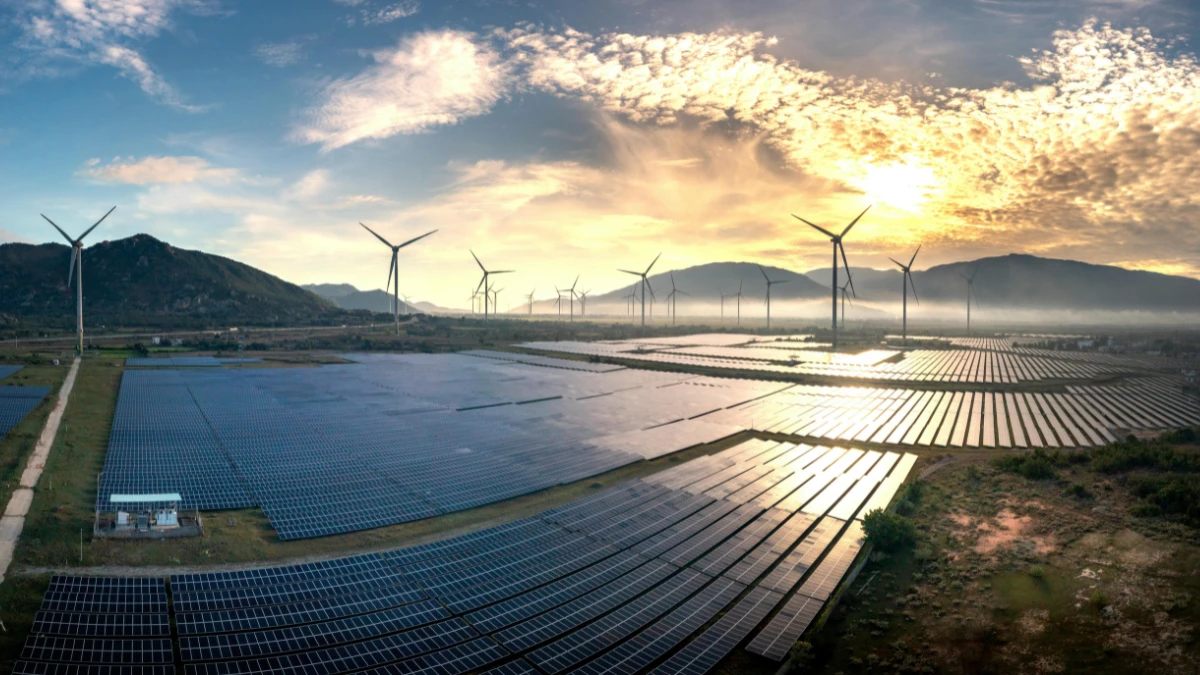
Gujarat's position in India's energy transition makes this regulatory alignment consequential. The state hosts the Khavda Renewable Energy Park — on track to become the world's largest , and accounts for a disproportionate share of India's utility-scale solar and hybrid capacity pipeline. Grid rules that do not reflect how modern renewable assets actually operate create hidden costs: curtailment risk, dispatch uncertainty, and reduced bankability for lenders assessing project cash flows.
The BESS Framework: From Add-On to Market Participant
The standalone BESS regulations are, if anything, the more commercially significant of the two instruments. Until now, virtually all battery storage in India has been procured as an adjunct to solar projects, either co-located storage in round-the-clock tenders or BESS attached to solar parks. Gujarat's draft regulations formally recognise standalone battery storage systems as independent market participants for the first time.
The proposed framework permits battery developers to earn revenue from multiple sources: energy arbitrage, ancillary services, bilateral power contracts, transmission support, and distribution-level grid services. It applies to a wide range of storage configurations, including renewable-linked storage, transmission-connected BESS, distribution-level storage, consumer-owned systems, and EV-linked storage. The framework also signals that storage procurement may become mandatory for obligated entities through linkage to Energy Storage Obligations.
The regulatory and commercial implications are significant. A standalone storage developer in Gujarat would, under this framework, no longer need to partner with a solar developer to access revenue streams from the grid. This opens the market to pure-play storage companies, and to capital that has been waiting for a clear regulatory basis before committing to independent storage projects in India.
A public hearing on the BESS regulations is scheduled for 15 June 2026. Stakeholder comments are open for 30 days from the 12 May notification date.
What Gujarat Signals for the National Picture
India's states are the real execution layer for the energy transition. Central government targets and MNRE tenders set the direction; state regulatory frameworks determine whether projects can actually be built, connected, financed, and dispatched.
Gujarat's dual regulatory push matters because the state has historically set the pace for others. Its open access regulations, renewable energy policy, and grid connectivity procedures have been referenced by other state regulators during their own reform processes. A comprehensive grid code update and a standalone BESS framework from GERC will increase pressure on Rajasthan, Tamil Nadu, Maharashtra, and Andhra Pradesh, all states with large renewable pipelines and grid codes that similarly predate the current technology reality.
The Ministry of Power's February 2025 directive requiring a minimum two-hour co-located storage component in all new solar tenders has already accelerated storage procurement nationally. Gujarat's proposed Energy Storage Obligation linkage takes that logic further: from procurement mandate to grid services market.
What Remains Open
The Grid Code 2026 and BESS regulations are both in draft. Final notification follows stakeholder consultation and, for the BESS framework, a public hearing in June. The speed of that process — and whether GERC tightens or relaxes the proposed ESO linkage in response to developer submissions, will determine how quickly the commercial opportunity materialises.
There is also the question of tariff certainty. Standalone storage projects earn revenue across multiple market mechanisms, but their economics depend on how ancillary services are priced, how grid congestion charges are structured, and whether GERC's final regulations provide the long-term contract visibility that lenders require.
What to Watch
- The outcome of the 15 June 2026 public hearing on GERC's BESS regulations, and specifically whether the Energy Storage Obligation linkage survives in the final notification
- Whether other major state regulators - Rajasthan, Tamil Nadu, Maharashtra follow Gujarat's lead with their own standalone storage frameworks in the second half of 2026
- Whether GETCO (Gujarat Energy Transmission Corporation) issues grid connectivity procedures for standalone BESS aligned with the new framework within the same regulatory cycle