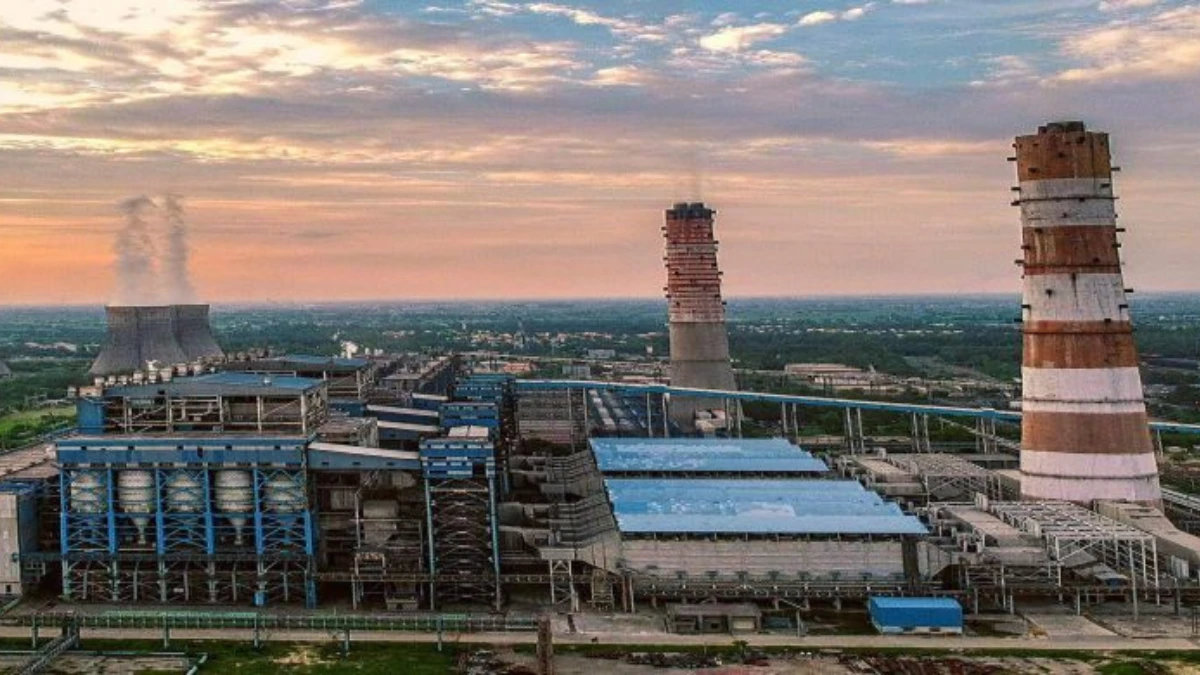
NTPC Awards ₹776 Crore BESS Contract to Pratap Technocrats for 570 MWh Deployment at Gadarwara and Khargone Thermal Power Stations
India's state power giant has moved from issuing storage tenders to signing contracts at scale and the sites it chose reveal a deliberate grid architecture, not a pilot mentality.
The energy transition in India is no longer waiting for greenfield renewables to displace legacy infrastructure. It is being built through that infrastructure. NTPC's award of a ₹776 crore battery storage contract to Pratap Technocrats, covering 570 MWh of capacity across two of its largest Madhya Pradesh thermal plants, is the clearest signal yet that India's dominant public sector utility has moved from planning to procurement at grid scale.
The numbers frame a structural reorientation, not a marginal adjustment. The Gadarwara super thermal power station will absorb 320 MWh of battery capacity; the Khargone plant will take 250 MWh. Together they represent the largest single BESS award at operational Indian thermal sites on record. This contract is itself a subset of a broader 2.67 GWh BESS tender across nine thermal stations, a programme that, once fully awarded, will embed more than two and a half gigawatt hours of dispatchable storage directly into the coal fleet's operating backbone. Per NTPC board disclosures from March 2026, the company has approved ₹5,822 crore for 4.7 GWh of total BESS, targeting 22 GWh of storage capacity by 2032.
The driver here is architectural, not optics. Thermal plants that once dispatched power on a predictable schedule now operate in a grid where solar generation creates sharp midday surpluses and steep evening demand ramps. Co locating storage at those plants allows NTPC to arbitrage the gap, absorbing excess renewable generation, discharging during peak demand hours, and participating in ancillary services markets, without building new transmission corridors. The economics of that model improve as India's renewable penetration rises, making each BESS unit installed today more valuable, not less, over its operating life.
Madhya Pradesh sits at the intersection of India's thermal legacy and its renewable ambition. The state hosts some of NTPC's highest capacity utilisation plants while also sitting adjacent to high irradiation solar zones. The choice to deploy storage at Gadarwara and Khargone is therefore not incidental. These are dispatching nodes, not experimental sites. The contract scope, full EPC including design, engineering, supply, installation, and commissioning, confirms the intent is operational infrastructure, not demonstration capacity.
The constraint is not ambition. It is execution timelines and battery supply chain depth. Pratap Technocrats, primarily known for telecom infrastructure, enters energy storage through a ₹776 crore contract that demands cross disciplinary project management at a scale it has not previously handled in this sector. The SPML Infra 1 GWh Barauni award, made under the same tender, follows a similar pattern, non specialist contractors winning at competitive prices. Whether those prices hold through delivery, and whether commissioning timelines are met, will determine whether the 2.67 GWh programme lands as designed or slips into the multi year delays that have historically afflicted India's power infrastructure contracting.
The shift is underway. The constraint is no longer ambition, it is the execution capability of a contracting market that has not yet been tested at this pace or this scale.
For capital allocators, the implications extend well beyond NTPC's own balance sheet. A 22 GWh storage target by 2032, if executed, positions India as one of the three largest grid storage markets on the planet by that date. It also sets a procurement template that other central and state utilities are watching closely. The tariff and contract structures being discovered through NTPC's competitive bidding will become the reference architecture for a market still in the process of price formation. The question is not whether storage becomes structurally embedded in India's grid. It already is. The question is which manufacturers, integrators, and balance of plant contractors establish the institutional relationships that come with being early, reliable, and on budget.