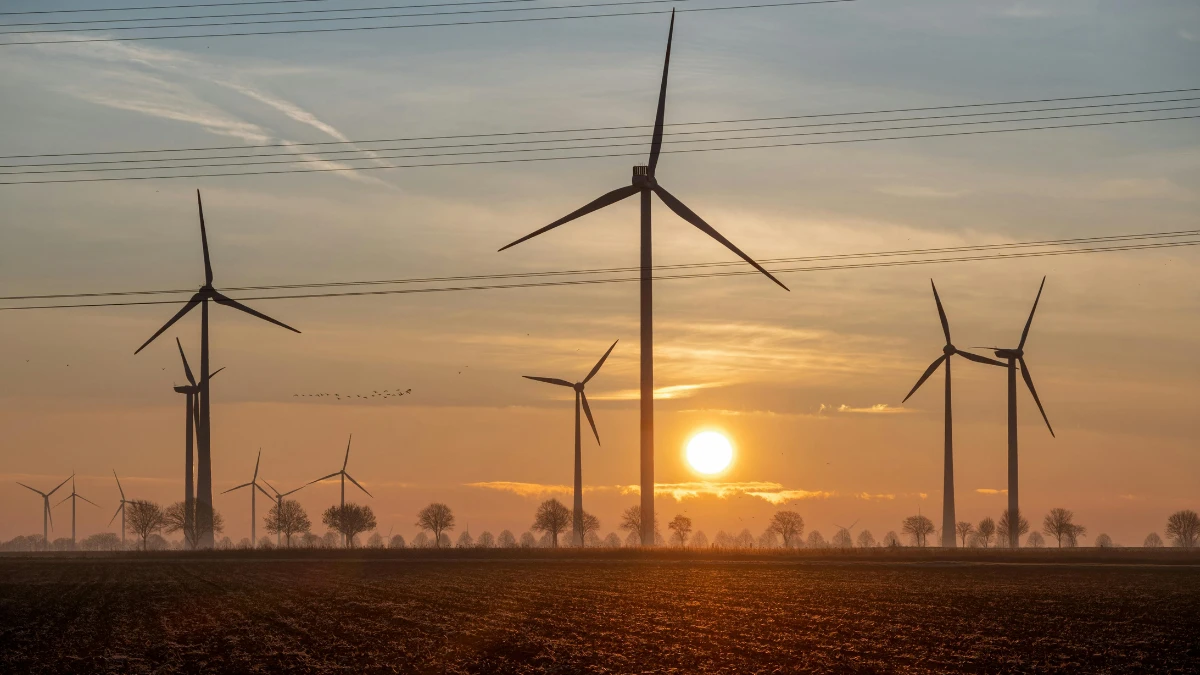
India Records Historic 6.1 GW Wind Energy Addition in 2025–26, Total Installed Capacity Crosses 56 GW
A record annual addition and 28 GW in the pipeline signal that India's wind ambition has shifted from aspiration to execution — but grid absorption and financing architecture remain the real test.
India's wind energy sector is no longer making incremental progress. It is compounding. The country added a historic 6.1 GW of wind capacity in 2025–26, its best annual figure on record bringing total installed capacity to over 56.1 GW, with a further 28 GW already under implementation. The numbers tell one story. The structural moment they represent tells another.
What makes this addition significant is not the volume alone — it is what the pipeline ratio implies. India's wind energy potential at 150 metres hub height is estimated at nearly 1,164 GW, a resource base that dwarfs current deployment by a factor of twenty. The 6.1 GW record, measured against that ceiling, is less a culmination than a starting point. The government's targets, 100 GW by 2030 and 156 GW by 2036, require sustained annual additions well above the current record pace. The trajectory is right. The velocity needs to hold.
The policy architecture driving this acceleration is now multi-layered in ways it was not three years ago. A dedicated wind component under Renewable Purchase Obligations ensures sustained demand, while the Approved List of Models and Manufacturers framework is tightening supply chain standards and reinforcing investor confidence in domestic equipment. A 500 MW pilot under the Contracts for Difference model has been launched to provide revenue certainty and improve market stability, a mechanism that, if scaled, could materially lower the risk premium attached to long-duration wind investments. The financing stack is finally catching up to the ambition.
India's strategic positioning within global supply chains adds a second-order dimension to this story. The country has built a domestic manufacturing ecosystem with annual capacity exceeding 24 GW and in-digenization levels of 70–80%, covering critical components including blades, towers, and gearboxes. As global buyers diversify away from concentrated manufacturing geographies, India is well-positioned to emerge as a trusted global manufacturing and supply partner, a role that would extend the economic value of wind buildout well beyond domestic capacity metrics.
The friction, however, is structural and immediate. Rajasthan alone has seen 11.5 GW of renewable energy curtailed since January 2026, with 8.3 GW in March alone, a figure that strips out the optimism from any capacity addition headline. Transmission infrastructure is not keeping pace with generation. Deviation penalties, power curtailment, and transmission delays are under active government review, but review is not resolution. Every gigawatt curtailed is a direct charge on the financial case for new investment.
The implication for capital is this: India's wind sector has de-risked the demand signal and the policy framework. What it has not yet de-risked is the grid. Investors evaluating wind exposure in India over the next three to five years are not betting on ambition, that is already priced. They are betting on whether transmission infrastructure, storage integration, and grid discipline can be operationalized at the speed the generation pipeline demands. The government's push toward hybrid and round-the clock renewable projects, alongside Green Energy Corridor expansion, suggests the direction is understood. The constraint is no longer ambition. It is execution,and the clock is running.