Urban Infrastructure at a Breaking Point:
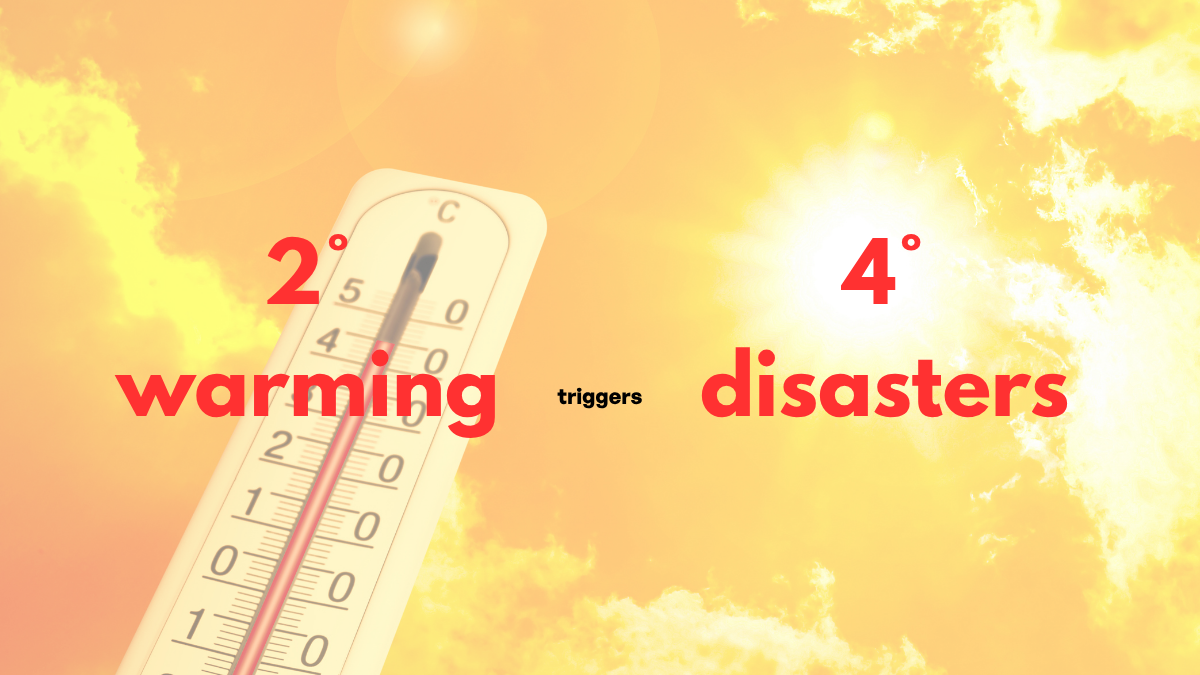
For over a decade, the international community has centered its climate strategy around the 2°C threshold, often treating it as a predictable boundary between manageable change and catastrophic disruption. However, a groundbreaking study published in Nature is now forcing industry professionals and policymakers to reconsider this assumption. The research suggests that ‘moderate’ warming does not guarantee moderate impacts; instead, it may trigger extreme climate events previously associated with much higher temperature trajectories.
The Failure of Averages
The study, led by Emanuele Bevacqua of the Helmholtz Center for Environmental Research, identifies a critical blind spot in traditional climate forecasting. Most institutional projections, including those frequently cited by the Intergovernmental Panel on Climate Change (IPCC), rely on the average outcomes of multiple climate models. While these averages provide a useful baseline, they often obscure the ‘tails’ of the distribution—the less likely but highly consequential scenarios.
By examining a wide range of individual model outcomes rather than a consolidated mean, Bevacqua’s team discovered that the potential impacts of 2°C warming are far broader and more severe than previously understood. For industries ranging from insurance to civil engineering, this means that planning for the ‘average’ 2°C scenario may leave infrastructure and supply chains dangerously exposed to 4°C-level events.
Urban Infrastructure Under Siege
One of the most immediate concerns highlighted in the report is the intensification of urban flooding. The research indicates that under a 2°C scenario, rainfall intensity could surge by 4% to 15%. For rapidly urbanizing regions in India and West-Central Africa, where drainage systems are already operating at or near capacity, this increase represents a tipping point.
For the construction and municipal planning sectors, the data suggests that current resilience standards may be obsolete before they are even fully implemented. The variability across models indicates that in worst-case 2°C scenarios, the hydraulic load on urban infrastructure could match the catastrophic levels once thought exclusive to a 3°C or 4°C world.
Agricultural Volatility and Global Breadbaskets
The outlook for global food systems is similarly unsettling. The study reveals that approximately one in four climate models predicts drought conditions under 2°C warming that rival or exceed those expected at 4°C. This uncertainty creates a significant challenge for the agricultural and commodities sectors.
Key agricultural hubs—including the Indian subcontinent, East Asia, South America, Australia, and North America—face a high degree of variability. This ‘drought uncertainty’ means that a 2°C world could manifest as a manageable shift for some, while for others, it could result in a total collapse of traditional crop cycles. For global supply chain managers, the primary takeaway is clear: geographic diversification is no longer just a strategy for growth, but a necessity for survival.
A New Paradigm for Risk Management
The implications of Bevacqua’s research extend far beyond academic circles. It calls for a fundamental shift in how industry professionals approach risk management. Moving forward, ‘average-based’ planning must be replaced by ‘risk-based’ planning that accounts for the full spectrum of possible outcomes.
As the world edges closer to the 1.5°C and 2°C markers, the message from the scientific community is becoming increasingly nuanced. Moderate global warming is not a safety net; it is a volatile environment where the extremes are closer than they appear.
Primary Source: Bevacqua et al. (2026). "Moderate global warming does not rule out extreme global climate outcomes." Nature. → https://www.nature.com/articles/d41586-026-01020-x